As part of Hispanic Heritage Month, I organized Spain Reads at UM, an exhibition at the University of Miami Libraries featuring a selection of books published in Spain from our collections. The exhibition aimed to highlight the richness and diversity of Spanish publishing and bring these resources closer to our university community.
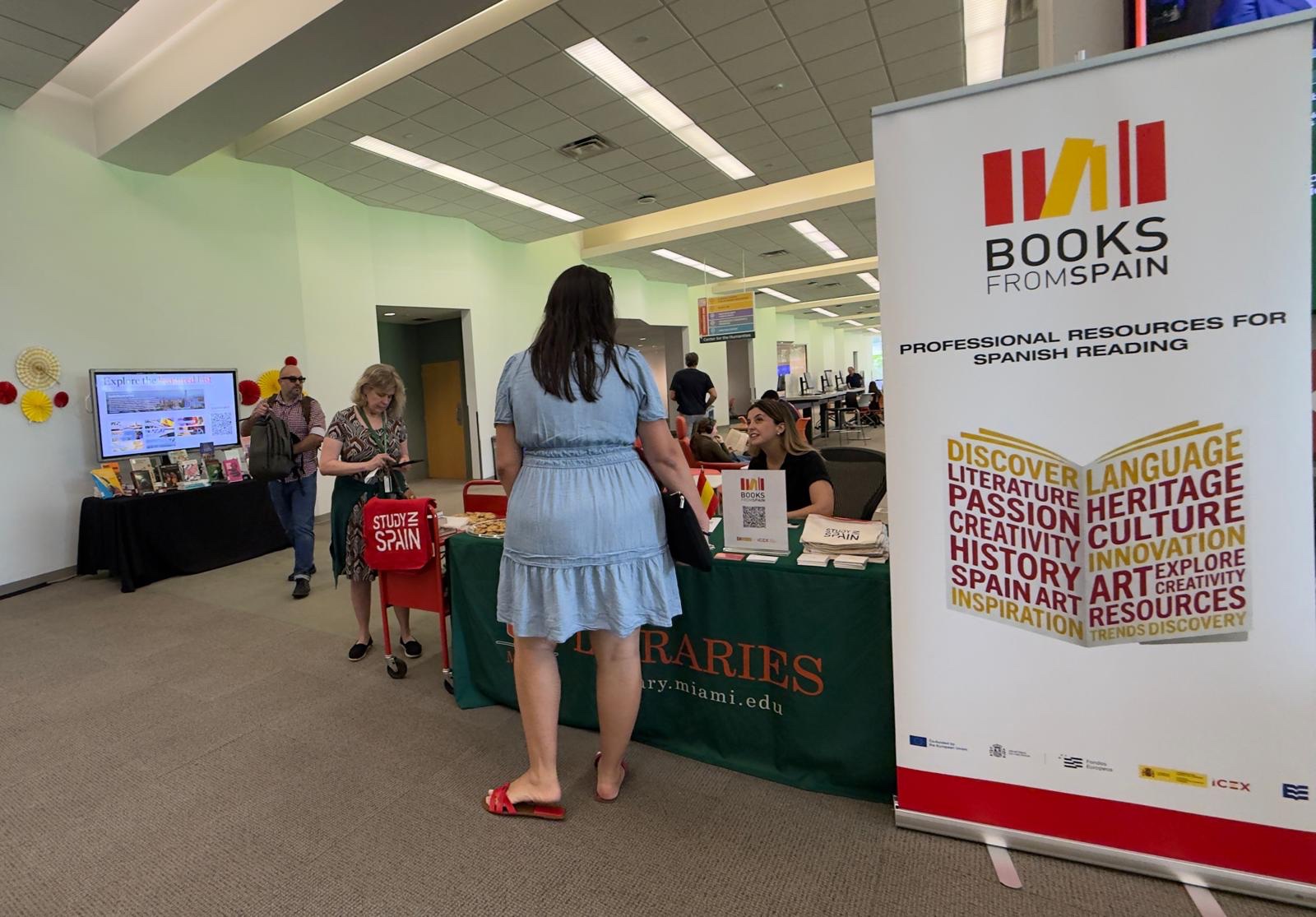
To prepare the exhibition, I reviewed and selected books from a wide range of subject areas. I wanted to show that our collections of Spanish publications extend far beyond literature. They include works across many disciplines, reflecting the diversity of publishing in Spain and offering resources of interest to students and researchers in different fields.
Although the Spanish publishing industry is largely dominated by two major publishing conglomerates, I made a conscious effort to include books from a variety of smaller and independent publishers. I wanted the selection to reflect not only the breadth of subjects represented in our collections but also the diversity of publishers contributing to Spain's literary and cultural landscape.
The physical exhibition was accompanied by the Featured List “Spain Reads at UM” that I created in the library catalog. This list allows visitors to explore a broader selection of titles and continue discovering our collections beyond the books that could be displayed in the exhibition.
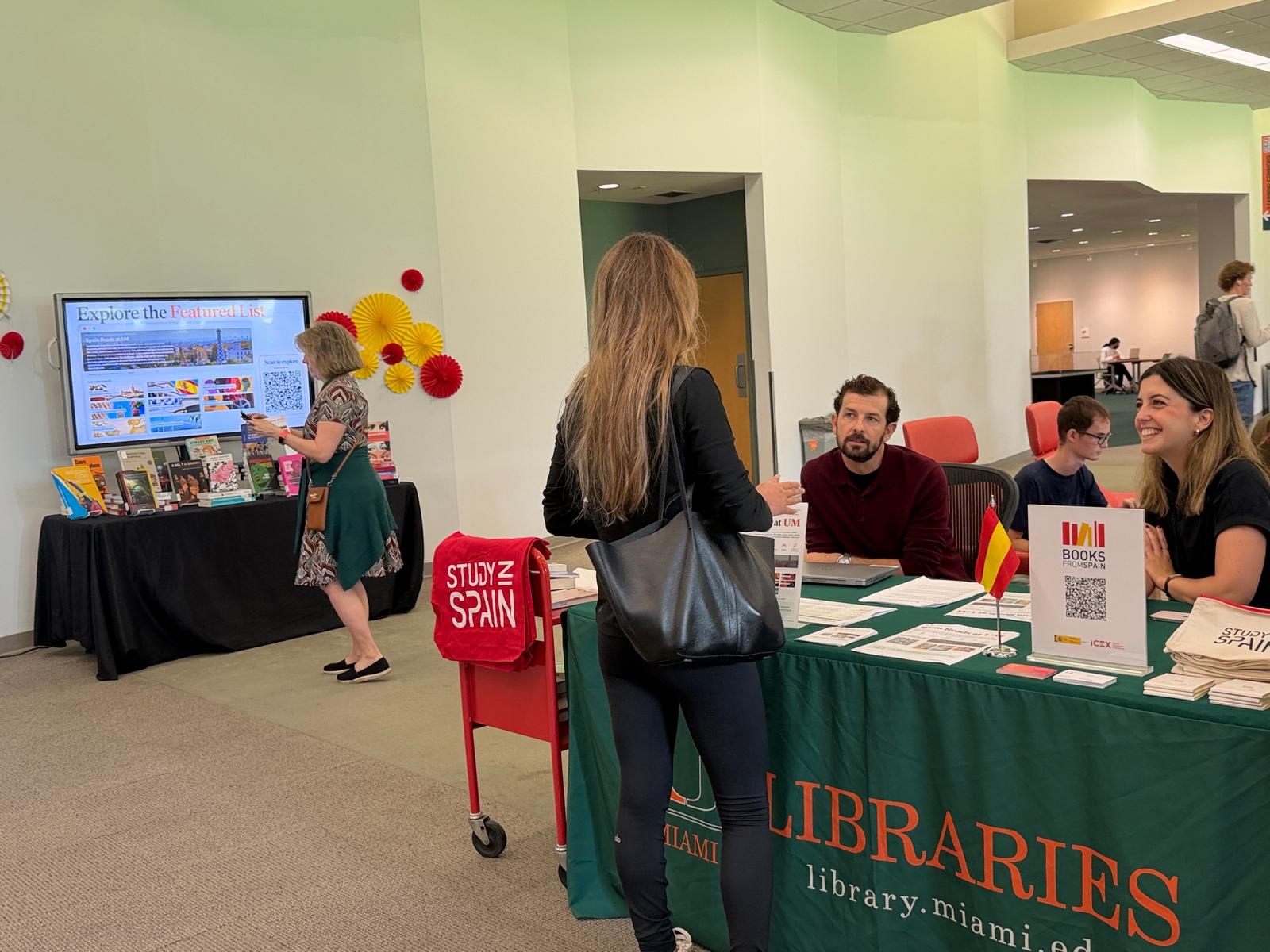
On Monday, September 21, I opened the exhibition alongside Mercedes Rosillo, Director of Cultural Industries at the Trade Office of the Embassy of Spain in Miami. I had met Mercedes just two months earlier at the American Library Association (ALA) Annual Conference, and it was a pleasure to reconnect and collaborate on this initiative. We spent part of the morning talking with students and other visitors, introducing them to the selection and discussing the books, the Spain Reads at UM initiative, and the presence of Spanish publications in our collections.
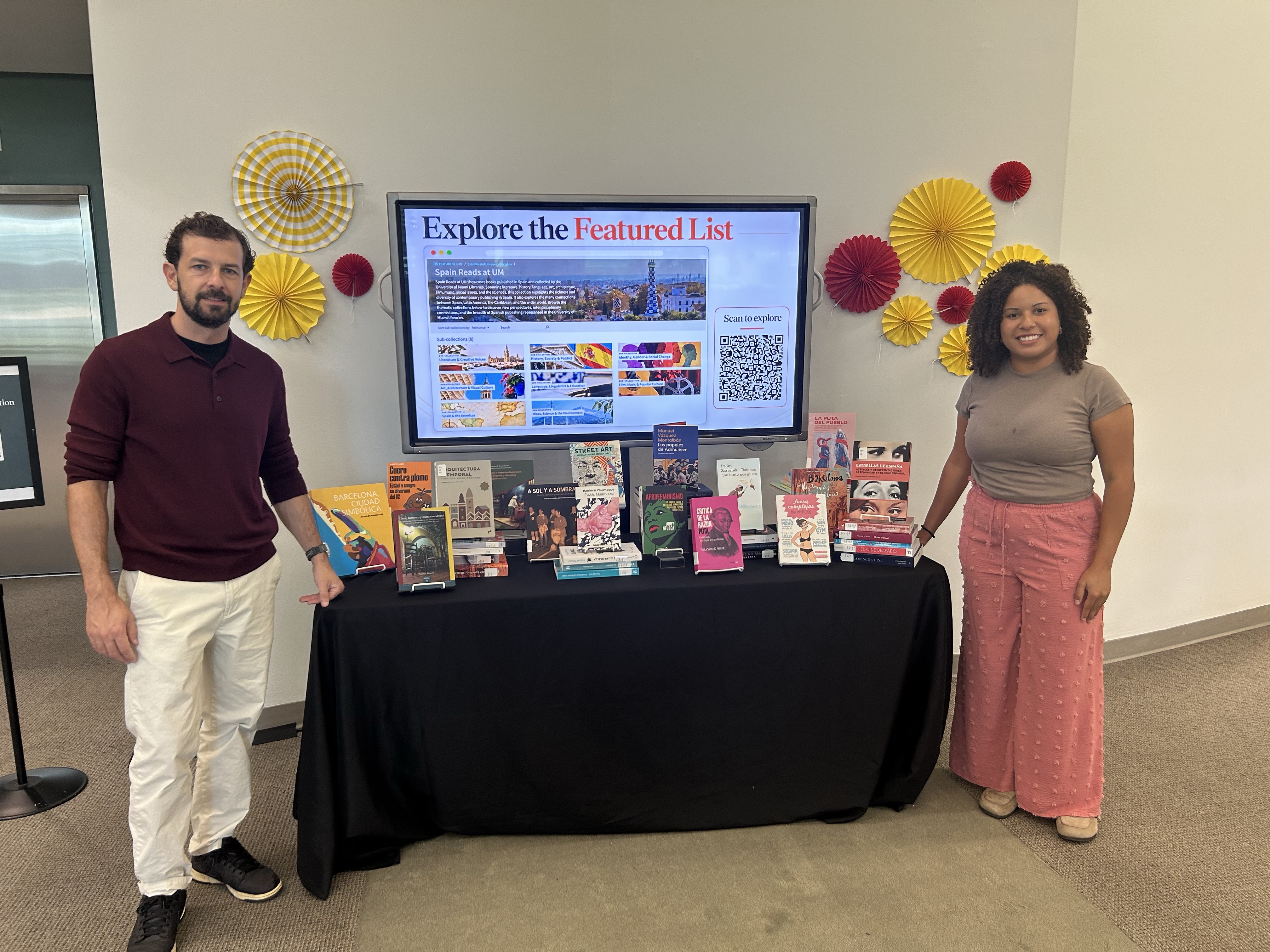
I particularly enjoyed working on this project because it connects different areas that attract me professionally: Hispanic collections, the selection and acquisition of materials, improving their visibility and discoverability, and building relationships with other institutions to make these collections more accessible and relevant to our university community.
← Back to Professional Activity