In May, I traveled to Mexico City to attend the Congreso Internacional sobre Metadatos 2026: Los metadatos en el Antropoceno cultural: análisis disruptivo de las colecciones digitales. The conference took place at three venues: the Auditorio Mario de la Cueva at UNAM, the Auditorio de la Escuela Superior de Cómputo at Instituto Politécnico Nacional (IPN), and the Auditorio Ángel Palerm Vich at Universidad Iberoamericana.
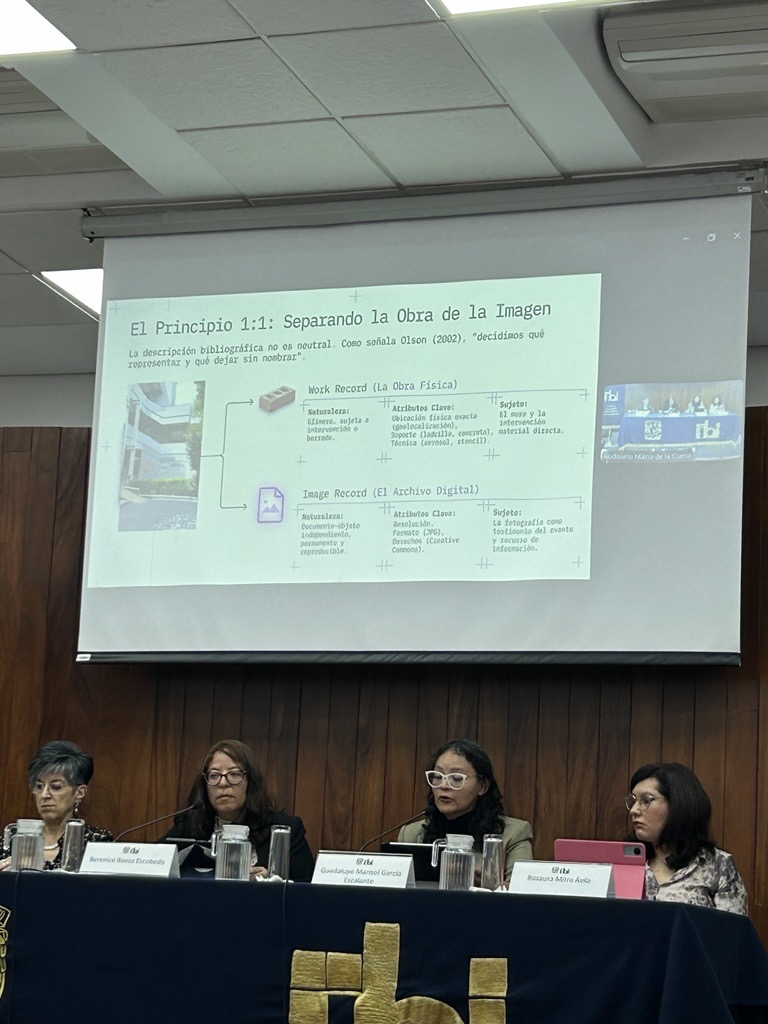
It was a good opportunity to hear different perspectives on metadata, digital collections, and some of the changes taking place in our profession. There were interesting presentations on artificial intelligence and cataloging, digital preservation and access, and the role of metadata in organizing, connecting, and providing context for information.
One of my favorite sessions was the keynote by Natalia Duque-Cardona from Universidad de Antioquia, Colombia, titled Animar el dato: metadatos, tierra y justicia en el antropoceno. I was particularly interested in how she challenged the idea that data is neutral or purely technical.
Her idea of animar el dato encouraged us to think about the people, communities, places, experiences, and memories behind the information we describe. From this perspective, describing a collection is not just about organizing information. It also involves making decisions about what becomes visible, how people and communities are represented, and which relationships are preserved.
This was quite different from the more technical way we usually discuss metadata, and that is precisely why it was one of the presentations that stayed with me.
← Back to Professional Activity